


Carbon farming in Africa’s smallholder agriculture
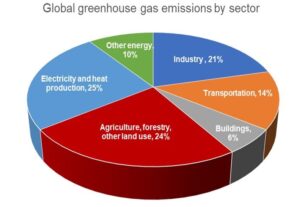
Human activities such as #farming, #deforestation, and the #combustion of fossil fuels contribute to #globalwarming. There is a significant amount of #CO2 and other greenhouse gasses generated through #factories, #vehicles, #powergeneration, #agriculture as well as other sectors. Global greenhouse gas #emissions from agriculture, #forestry and other land uses make up 24% of the total global emissions (IPCC, 2021). Industry (21 %) and transportation (14 %) account for less than half of the total emissions (14 %).
Carbon farming is a set of approaches used to improve agricultural operations or land usage to reduce greenhouse gas emissions and increase amount of carbon stored in soil and plants. Carbon sequestration is another name for this process. Carbon farming uses a variety of methods, including:
1. Conservation tillage or no-till agriculture
An average of 20 tonnes of soil per hectare is lost each year as a result of tillage and water erosion (FAO, 2020). Tillage reduces the diversity of soil microbes by displacing and altering them. Using no-till farming methods preserves soil fertility and structure, and reduces erosion. Soil tilling is a crucial factor in the degradation of the soil. When a farmer tills the soil, it disturbs the soil structure, making it more vulnerable to erosion. The lack of organic matter in the soil makes it vulnerable to water and wind erosion. This results in the depletion of nutrients and organic materials in the environment.
2. The use of cover crops
Crop rotation and cover crops are utilised to improve soil structure, minimise disease, and increase soil fertility. Maintaining microbial diversity is a benefit of no-till farming. The ability of soil to sequester carbon may be affected by changes in the variety of microbial populations.
3. Mulching
Soil are protected by crop residues that remain on the surface. Water-holding capacity is increased as a result of improved soil structure and cover. This reduces soil deterioration and runoff, preventing pollution from spreading to surrounding waterways.
Other techniques such as rotation of crops; nutrient management; integrated pest management (IPM); precision irrigation methods that avoid flooding soil surfaces; and rejuvenation of damaged soil are useful in sequestering carbon from the soil and planta.
What are the benefits for farmers in carbon farming?
Landowners and farmers alike benefit from carbon farming, which enhances soil health and productivity while reducing costs. Carbon credits are another manner in which carbon farming can pay off for the farmer. Farmers can sell carbon credits to firms from a variety of industries and receive payments for the credits sold under new national and private carbon offset programmes. Many of the buyers are corporations that are trying to offset their carbon footprints voluntarily or because of regulatory mandates.
By Kojo Ahiakpa
Team Lead and Agribusiness Advisor
Research Desk Consulting Limited
Email: kojo.ahiakpa@researchdesk.consulting